


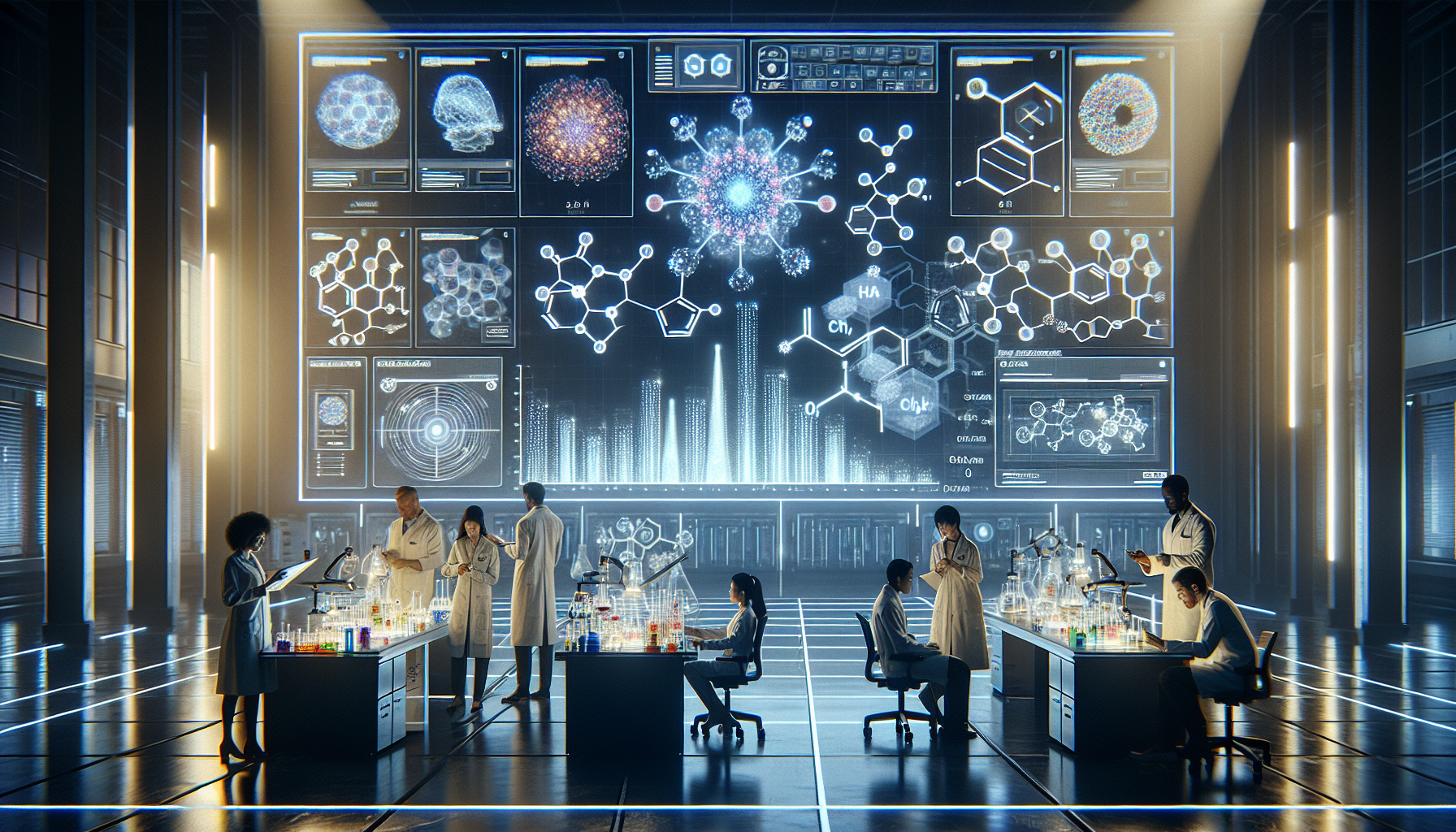
Harnessing AI in Drug Discovery: Revolutionizing Healthcare Innovation
Introduction
In the evolving landscape of healthcare, AI in drug discovery emerges as a groundbreaking approach that is reshaping traditional methodologies. As researchers seek to expedite the development of life-saving medications, innovative AI applications are stepping in to streamline processes that previously took years and vast resources. Particularly noteworthy are models like Chai-2, which promise to enhance the efficiency and effectiveness of drug development. This blog will explore how these technologies are profoundly impacting the drug discovery process and healthcare innovation as a whole.
Background
To appreciate the importance of AI in drug discovery, it is essential to understand the historical context and technological advancements leading to its current implementation. Traditional drug development entails a long sequence of steps, often taking over a decade to bring a new drug to market. This includes extensive research, clinical trials, and regulatory review, which collectively consume substantial financial and human resources.
The introduction of artificial intelligence marks a significant paradigm shift. With the advent of machine learning and data analytics, researchers can now analyze vast datasets to identify potential drug candidates faster than ever. This evolution started as early as the 2000s but gained momentum in the last decade, as increased computational power and breakthroughs in algorithms have made it feasible to apply AI across various stages of drug development. As a result, healthcare innovation is at the forefront of a new era, with technologies like Chai-2 leading the way.
Trend
The rise of multimodal AI models, such as Chai-2, signifies a transformative trend in the healthcare industry. These models employ complex algorithms to analyze diverse types of data, bolstering the drug discovery process by improving accuracy and efficiency. An excellent analogy for understanding this trend is comparing traditional drug discovery to searching for a needle in a haystack. AI models like Chai-2 act as powerful magnets, efficiently extracting relevant candidates while leaving the extraneous material behind.
The innovative capabilities of AI applications are best illustrated through their ability to enhance antibody design, a crucial aspect of drug development. By leveraging multimodal data, Chai-2 enables researchers to perform zero-shot de novo designs, yielding results that exceed previous benchmarks. As a direct consequence, pharmaceutical companies can shorten development timelines, reduce costs, and ultimately bring more effective medicines to market. This powerful trend in the drug development process significantly amplifies the potential for serious advancements in healthcare innovation.
Insight
An analysis of recent advancements brought by Chai-2 reveals its exceptional performance in drug discovery. It achieves a 16% hit rate across multiple targets while utilizing minimal design candidates—often as few as 20 per target. This feat is particularly remarkable when considering that it outperforms earlier methodologies by over 100 times.
Furthermore, the Chai Discovery Team has integrated an innovative all-atom generative design module. This feature predicts accurate antibody-antigen complex structures, underscoring the model’s ability to generate a wider range of functional binders in record time—validated binders can be produced in under two weeks. This has significant implications for drug discovery, as it reduces the reliance on extensive high-throughput screening methods that can be resource-intensive.
To understand this breakthrough, consider the impact of having a master key that opens numerous doors instead of needing a unique key for each one. With Chai-2, researchers can pinpoint several effective drug candidates simultaneously, dramatically increasing the efficiency and success rate of drug development initiatives.
Forecast
The future of AI in drug discovery is promising, with several anticipated developments on the horizon. As algorithms become more sophisticated and datasets continue to grow, AI applications are expected to refine their predictive capabilities, leading to even more effective drug candidates and innovative therapeutic options.
Moreover, the integration of AI into personalized medicine could transform patient outcomes significantly. By analyzing individual patient data, AI could tailor treatments to specific genetic and biochemical profiles, optimizing efficacy and minimizing side effects. This could pave the way for a more holistic and patient-centered approach to healthcare, further enhancing the healthcare innovation landscape.
In conclusion, as we continue to harness AI in drug discovery, the implications for the future are vast and encouraging. The advancements from models like Chai-2 herald a shift towards smarter, faster, and more efficient drug development processes.
Call to Action
As the intersection of technology and healthcare accelerates, staying informed about these changes is crucial for everyone involved in the field. Readers are encouraged to engage with the topic by following developments in AI applications and staying abreast of innovations like Chai-2. Explore resources, attend conferences focused on healthcare innovation, and consider how these rapidly advancing technologies can contribute to the evolution of drug discovery and healthcare at large. The future of medicine is being rewritten—don’t miss out on the opportunity to be a part of it.
For further insights into Chai-2 and its transformative capabilities, check out this detailed article.